

The Verdict (TL;DR):
- Worth it? Yes—but only if you want steady, long-term passive income, not quick thrills.
- Best for: Patient investors who reinvest dividends and think in decades, not months.
- Realistic returns: 6%–9% annualized if you reinvest and hold quality stocks or ETFs.
Introduction
Most investors love the word “income.” The idea of getting paid just for owning stocks feels almost too good to be true—and that’s the allure of dividend investing. With talk about passive income flooding investing forums and TikTok clips, it’s easy to believe that building a dividend portfolio is a golden ticket to financial freedom.
But here’s the catch: consistent, meaningful dividend income is painfully slow to build. Think about it—how many retail investors have the patience to wait 10 or 15 years before the snowball effect really kicks in? Not many.
This guide breaks down how dividend investing truly works, what kind of returns you can expect, and which strategies actually hold up when markets turn ugly.
How It Actually Works (The Mechanics)
Dividend investing is deceptively simple:
You buy shares of companies that regularly pay dividends—usually quarterly—and either pocket the cash or reinvest it into more shares. Over time, those reinvested dividends generate more dividends, which grow your income base even faster.
If you look closely, the power isn’t in the dividend itself—it’s in compounding. Reinvesting dividends transforms small, incremental payments into long-term capital growth.
For example, consider two investors who each buy $10,000 worth of dividend stocks yielding 4%. One spends the dividends, the other reinvests. After 20 years, assuming similar market conditions, the reinvestor can end up with roughly twice as much money. That’s not magic—it’s math.
Reliable dividend-paying companies are often found in sectors like utilities, consumer staples, healthcare, and financials. You’ll also find stability in dividend ETFs such as Vanguard High Dividend Yield ETF (VYM) or Schwab U.S. Dividend Equity ETF (SCHD). These balance out individual stock risk while offering solid yields and exposure to blue-chip names.
For more background on dividend mechanics and valuations, check resources like Investopedia and Morningstar for performance data and analyst insights.
The Hard Facts
| Feature | Details |
|---|---|
| Expected Returns | 6%–9% per year with reinvested dividends |
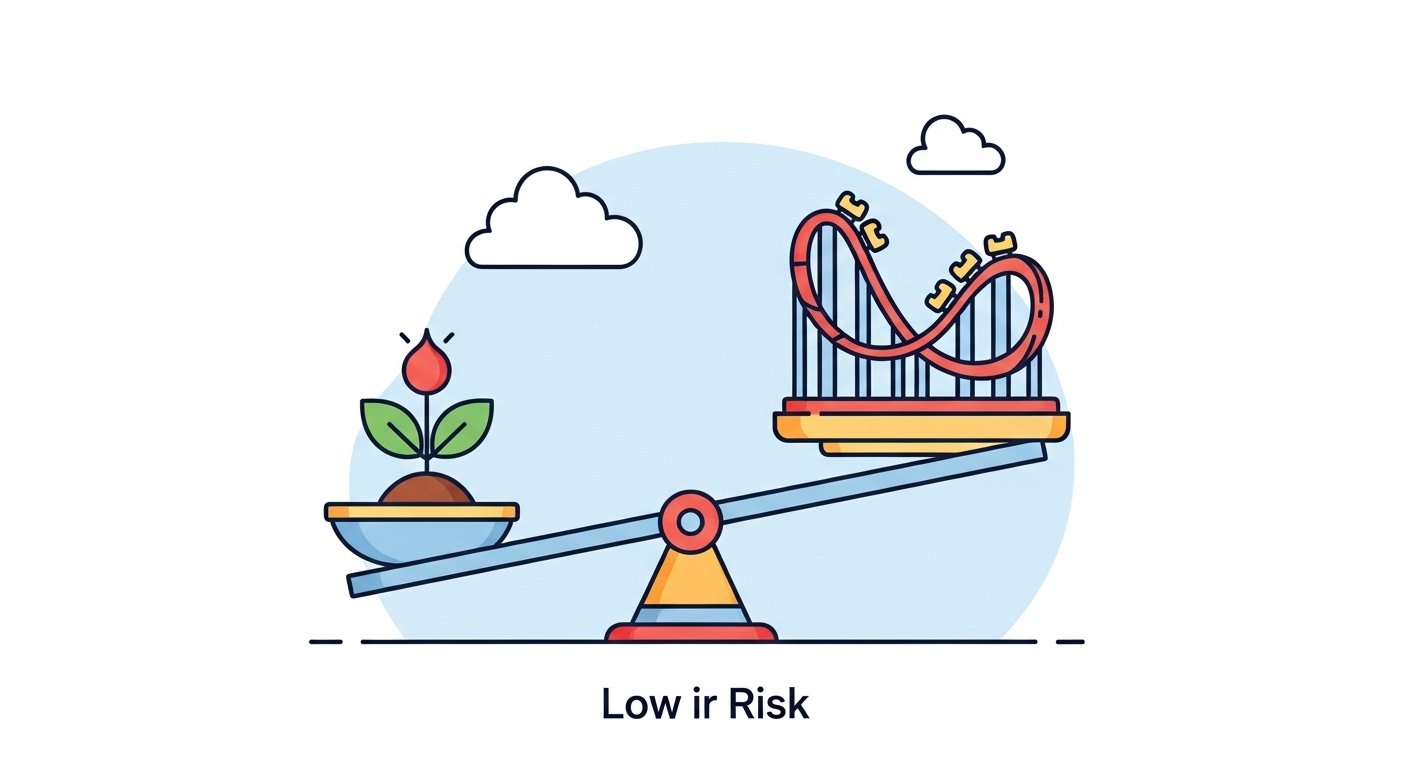
| Risk Level | Medium—income is stable, but prices can still drop |
| Time Horizon | Long-term (10+ years) |
| Platforms | Fidelity, Schwab, Vanguard, Robinhood, M1 Finance |
Let’s be real—dividends won’t make you rich in a year. But they can give you something most “hot stocks” never deliver: reliable cash flow and psychological stability during downturns.
The Reality Check (Pros & Cons)
Pros
- Predictable cash flow: Companies like Coca-Cola and Johnson & Johnson have decades-long records of steady payouts.
- Compounding returns: Reinvesting early transforms modest yields into serious wealth over time.
- Lower stress: Dividend-paying firms often show less volatility because institutional investors hold them for income, not speculation.
- Inflation hedge: Dividend growth stocks tend to raise distributions, protecting your purchasing power.
Cons
- Slow burn: Getting meaningful income requires capital—lots of it. $100,000 at a 4% yield is just $333 a month.
- Dividend cuts: Companies can suspend or reduce dividends anytime. Financial crises expose fragile payers.
- Tax drag: Unless held in tax-advantaged accounts, qualified dividends face taxation that chips away at returns.
- Value traps: High yields can signal financial distress, not opportunity.
The reality is most investors underestimate the patience this strategy demands. It usually takes 5 to 10 years before reinvested dividends and compounding deliver life-changing returns. You won’t notice dramatic growth in year one or two. The magic happens after you stick through the boring middle years—the part most people abandon.
Step-by-Step Action Plan
-
Start with index-based dividend ETFs.
Begin with broad, diversified vehicles like SCHD, VYM, or HDV. These provide exposure to hundreds of dividend stocks at low cost. Check the detailed ETF breakdowns on NerdWallet before buying. -
Add individual blue-chip dividend stocks.
Once comfortable, you can add stalwarts like Procter & Gamble (PG), PepsiCo (PEP), or AbbVie (ABBV)—companies with uninterrupted dividend growth histories. -
Automate reinvestment.
Set up DRIP (Dividend Reinvestment Plans) through your brokerage. This ensures every dollar keeps working without emotional decisions. -
Evaluate dividend safety.
Look at payout ratios, cash flow coverage, and industry trends. Use analyst assessments from Forbes and peer comparisons on CNBC to avoid yield traps. -
Track dividend growth, not just yield.
A 3% yield that grows at 8% annually often beats a flat 6% yield after a decade. Growth matters more than income in the early years. -
Use tax-advantaged accounts.
Hold dividend payers in IRAs or 401(k)s when possible to minimize dividend taxation. -
Avoid the “chase high yield” trap.
I’ll be honest, a 10% yield looks mouthwatering—but if it’s unsustainable, you’ll lose more in price declines than you ever earned in income.
The Final Verdict
At the end of the day, dividend investing works—but it’s not exciting, and that’s its secret strength. It rewards consistency, patience, and temperament more than timing or luck.
If you want short-term thrills, dividend stocks will feel like watching paint dry. But if your goal is true passive investing, dividends provide a system that steadily converts time into income.
Let’s break this down:
- You’ll need time. Compounding rewards those who reinvest year after year.
- You’ll need discipline. Skipping reinvestment or chasing high yields wrecks the math.
- You’ll need capital. Building a $1,000/month dividend stream can take $250,000–$300,000 in equity at today’s yields.
Think about it—every serious investor I know builds some exposure to dividends, not because it’s glamorous, but because it’s consistent. They use them as an anchor while taking selective growth risks elsewhere. Passive income through distributions provides financial gravity in volatile markets.
The reality is dividend investing isn’t just a strategy; it’s a financial temperament. If you’re okay with slow, steady, compounding gains—and you understand that wealth accumulates quietly—it’s absolutely worth it.
If not, you’ll find yourself chasing faster returns and burning out before the snowball ever forms.